
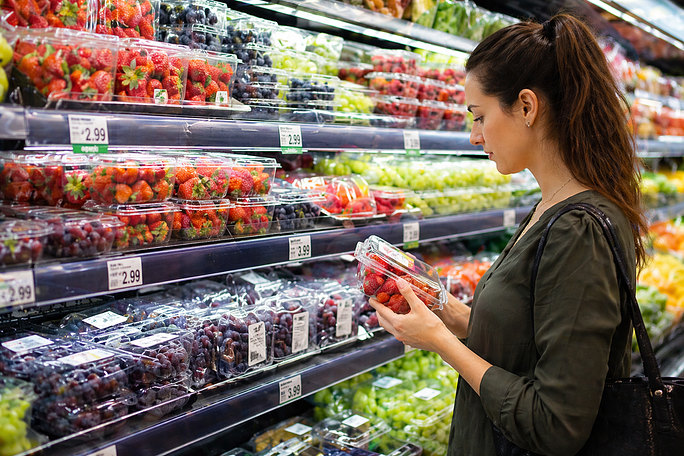
Packaging issues rarely show up at dispatch. They show up at the destination. A shipment might arrive on time, with the product intact, and still get postponed. The delays are not because of wear. But because the packaging cannot clearly display the material origin or processing history, or comply with food-contact requirements.
The issue is no longer about packaging at this juncture. It definitely creates a compliance risk that can delay clearances, trigger audits, or impact buyer trust. That shift is changing how Fruit Packaging is evaluated across global supply chains.
Why the lack of creates real export risks
Let’s say you are exporting fresh produce.Everything looks fine. The fruit is intact. The packaging is clean. But at the destination, a buyer or regulator asks for documentation. Not just a declaration, but proof. Material origin. Processing history. Compliance validation. If that chain breaks at any point, the shipment slows down. In some export programs, documentation gaps can lead to extended inspections or increased risk of rejection at entry points.
That is the reality now. Export risk is no longer just about damage or delays. It is about whether your packaging can withstand scrutiny.
Why compliance is no longer a checkbox in fruit packaging systems
Compliance used to feel like a final step. Tick the requirement and move forward. Now it behaves differently. Frameworks like EFSA, FDA, and EPR are pushing things upstream. They are asking how the material was sourced and processed, and whether those steps can be consistently verified.
So instead of a single checkpoint, compliance becomes a continuous requirement. This is where Fruit Packaging shifts from being a product to being part of a system.
From material origin to packaging credibility
Think about what recycled material actually goes through. Collection. Sorting. Washing. Decontamination. Extrusion. Thermoforming. That is a long chain. And at every stage, something can change. Without visibility across that chain, you are relying on assumptions.
Traceability removes that uncertainty. It connects each step, so you don’t have to guess what happened. You know.
And that is what turns fruit packaging into something credible, not just functional.
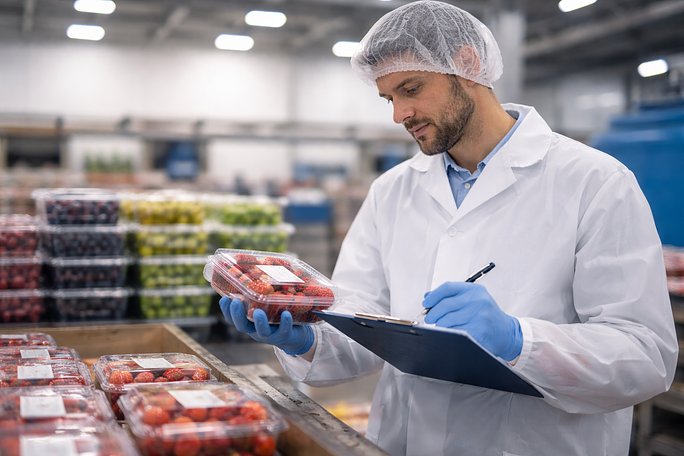
Why traceability supports retail confidence
Retailers are not just moving products. They are accountable for what reaches the shelf.
If something goes wrong, it reflects directly on them. That is why they are asking more questions before products even reach retail, especially around material origin, processing, and compliance. Clear traceability makes those conversations easier. It gives them confidence that what they are sourcing meets safety and sustainability expectations.
In that context, Fruit Packaging becomes part of how trust is built with the end consumer.
For brands working toward more responsible sourcing, this also aligns with broader expectations around sustainable packaging systems.
How traceability improves supply chain efficiency
Here is something that often gets missed. When traceability is weak, verification repeats. Different teams ask the same questions. Documents are checked again and again. Time is lost at every stage. When traceability is built into the system, that friction reduces.
Information is already available. Decisions move faster. The supply chain flows instead of stopping at every checkpoint.
At scale, this contributes to measurable efficiency gains across export handling and distribution networks.
Why consistency matters as much as tracking
Traceability sounds like tracking, but it is not only that. It is also about whether what you track stays consistent. If one batch behaves differently from another, the data loses meaning. Documentation says one thing, reality shows another.
That is where process control comes in. It ensures that what is recorded actually reflects what is delivered.
From traceability to system-level thinking
The biggest shift is how traceability is implemented. If it is treated as an add-on, it becomes another layer of work. More checks, more documentation, more effort. But when it is built into the system itself, things change.
Material sourcing, extrusion, and thermoforming all operate as part of one connected process. Data flows naturally through each stage. Nothing needs to be reconstructed later. That is when traceability stops being a task and starts becoming a capability.
Why is this shift happening now in fruit packaging
The expectations have changed. Buyers want clarity. Regulators want validation. Consumers want accountability. All three are asking for the same thing, just in different ways. And packaging sits right in the middle of that conversation.
That is why traceability is no longer optional. It is becoming a baseline expectation in Fruit Packaging.
Conclusion: from packaging to proof
Packaging still protects the product. That part has not changed. What has changed is what comes with it. Now, packaging also needs to explain itself. Where it came from. How it was made. Whether it can be trusted.
At AVI Global Plast, this is approached as a system, not a feature. Material sourcing, processing, and conversion are aligned so traceability is built into how packaging is produced. The result is straightforward. Fruit packaging that performs, and just as importantly, packaging that can prove it.
FAQs
What is traceability in fruit packaging?
It means being able to clearly track the origin of materials and their movement through each stage of production.
It means being able to clearly track the origin of materials and their movement through each stage of production.
Why does traceability matter for exports?
Because global markets expect proof of compliance, not just statements.
Because global markets expect proof of compliance, not just statements.
How does traceability support compliance?
It provides verifiable records that confirm packaging meets required safety standards.
It provides verifiable records that confirm packaging meets required safety standards.
Does traceability improve supply chain efficiency?
Yes. It reduces the need for repeated checks and speeds up decision-making.
Yes. It reduces the need for repeated checks and speeds up decision-making.
Is traceability only relevant for recycled materials?
No. It is important across all packaging where consistency and accountability matter.
No. It is important across all packaging where consistency and accountability matter.
Explore how AVI Global Plast enables traceable Fruit Packaging systems that support compliance, export readiness, and long-term trust in the supply chain.