
Packaging failures rarely start at the forming stage. They begin much earlier. A thermoformed container may look perfect once produced. Clear surface. Defined shape. Stable structure. Yet during filling, sealing, or transport, issues start to appear. Cracking at stress points. Loss of clarity. Inconsistent wall thickness. Reduced load strength.
At that point, the problem is no longer about forming. It traces back to the Plastic Sheet used at the very beginning. This is where performance is actually determined.
Why sheet quality directly affects thermoforming outcomes
Thermoforming is a conversion process. It does not create material behavior. It reveals it.
When sheets are heated and stretched over molds, any variation in material properties becomes visible. Differences in thickness, moisture levels, or intrinsic viscosity influence how the material flows and distributes.
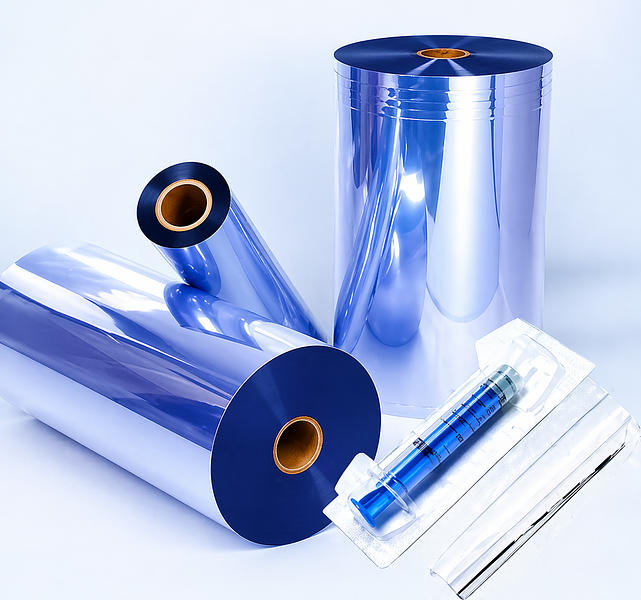
In practical terms, plastic sheets used for thermoforming typically range between 150 and 1000 microns and are supplied in rolls or cut sheets, depending on the application. Variations within this range directly influence how the material heats, stretches, and distributes during forming, especially in high-speed production environments.
If the sheet lacks consistency, the formed packaging inherits that inconsistency. This shows up as uneven wall distribution, reduced structural strength, optical distortion and localized weak points. In food packaging, these are not minor defects. They directly affect usability, safety, and shelf performance.
Why food-grade requirements make this more critical
Food-contact packaging operates under tighter expectations. Clarity is not just aesthetic. It allows product visibility. Structural integrity is not optional. It protects the product during stacking and transport. Material stability ensures the pack performs consistently across different temperatures and handling conditions.
When the quality of a plastic sheet fluctuates, these requirements are harder to meet.
At scale, even small variations can lead to higher rejection rates, inconsistent sealing performance, reduced shelf appeal and increased product damage. This is where material quality shifts from a technical detail to a business concern.
Surface treatments also influence performance at this stage. Anti-fog coatings help maintain clarity in cold chain conditions, while anti-block and silicone treatments improve sheet handling and separation during processing. These treatments directly affect both forming consistency and end-use functionality. Food-contact packaging also requires compliance and traceability. Material composition, processing conditions, and batch-level data must be controlled and documented to meet regulatory requirements.
From material variability to packaging risk
Recycled materials, especially rPET, introduce another layer of complexity. Feedstock can vary based on source, processing, and prior use. This affects intrinsic viscosity, contamination levels, and moisture content. Intrinsic viscosity plays a key role here. It directly affects melt strength, clarity, and thermoforming behavior. If IV varies beyond a controlled range, the sheet may become too brittle or lose structural stability during forming.
If not controlled, this variability carries forward into sheet production. And once it reaches the thermoforming stage, the impact becomes visible. The packaging may lose stiffness due to developed haze or reduced transparency, or fail during forming or handling. Without consistency at the sheet level, performance becomes unpredictable.
Why extrusion control defines sheet performance
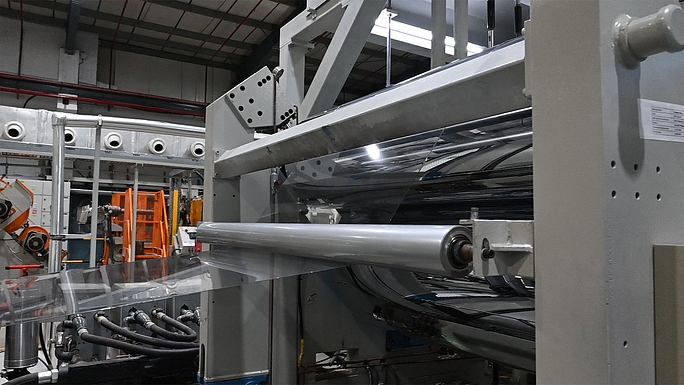
Sheet extrusion is where material behavior is stabilized. This stage determines thickness uniformity, moisture control, intrinsic viscosity balance & surface quality. In high-volume production, even small deviations can repeat across thousands of units. With rPET in particular, variability in input material makes controlled extrusion essential. Without tight control over processing parameters, inconsistencies in thickness, IV balance, and surface quality can carry forward into forming and affect final packaging performance.
When extrusion is tightly controlled, the sheet behaves predictably during forming. It stretches evenly. It maintains clarity. It retains structural strength. This is what allows thermoforming to deliver repeatable results.
Why thermoforming performance depends on upstream control
It is easy to evaluate packaging at the final stage. What you see is the formed container.
But by then, the outcome is already decided. Thermoforming cannot correct poor sheet quality. It can only shape what it receives.
When sheet properties are stable, forming is uniform, the wall thickness is consistent, and structural integrity is reliable. When they are not, defects repeat at scale, performance varies batch to batch, and handling risks increases. This is why upstream control matters more than downstream correction.
From process steps to system-level performance
Packaging performance is not created by one stage alone. Material preparation, sheet extrusion, and thermoforming are interconnected. Each stage influences the next. When these operate as separate processes, variability increases. When they are aligned, consistency improves. This is where Plastic Sheet quality becomes part of a larger system rather than an isolated input.
A connected process ensures that material consistency flows into forming, design intent translates into real performance, and defects are minimized before they scale. This becomes especially relevant in applications such as food trays, fresh produce punnets, and blister packaging, where clarity, strength, and dimensional consistency are critical. In each case, sheet quality directly determines how reliably the packaging performs at scale.
Why this matters for real-world supply chains
In food packaging, performance is tested outside the factory. Containers are stacked, transported, handled, and displayed. They experience pressure, temperature changes, and repeated movement. If the material foundation is weak, these conditions quickly expose it.
It can result in product damage during transit, reduced shelf life due to compromised structure, higher returns or rejection rates, and loss of retailer confidence. What starts as a material issue becomes a supply chain problem.
Why packaging decisions are shifting upstream
There is a visible shift in how packaging is evaluated. Instead of focusing only on the final product, buyers are looking at how it is made. Material consistency, process control, and system integration are becoming key decision factors. This is especially relevant for food-grade applications, where performance and compliance must align.
In this context, Plastic Sheet quality is no longer a background factor. It is a primary driver of packaging reliability.
Conclusion: from sheet quality to packaging performance
Thermoformed packaging does not fail on its own. It reflects the quality of the material it starts with. When sheet properties are controlled, packaging performs as expected. When they are not, issues appear across forming, handling, and distribution.
At AVI Global Plast, this is addressed through an integrated approach where material processing, sheet extrusion, and thermoforming operate as a connected system. This ensures that sheet quality translates directly into consistent packaging performance. The outcome is straightforward. Reliable packaging, predictable behavior, and reduced risk across the supply chain.
FAQs
What is the role of a plastic sheet in thermoformed packaging?
It acts as the base material that determines how the packaging forms, performs, and behaves under real conditions.
It acts as the base material that determines how the packaging forms, performs, and behaves under real conditions.
Why does sheet thickness consistency matter?
It ensures uniform wall distribution, which directly affects strength and durability.
It ensures uniform wall distribution, which directly affects strength and durability.
How does recycled material affect sheet quality?
Variations in recycled input can impact viscosity, clarity, and forming behavior if not properly controlled.
Variations in recycled input can impact viscosity, clarity, and forming behavior if not properly controlled.
Can thermoforming fix poor sheet quality?
No. Thermoforming only shapes the material. It cannot correct inconsistencies present in the sheet.
No. Thermoforming only shapes the material. It cannot correct inconsistencies present in the sheet.
Why is process integration important in packaging manufacturing?
Because it reduces variability between stages and ensures consistent performance across production runs.
Because it reduces variability between stages and ensures consistent performance across production runs.
Explore how AVI Global Plast ensures consistent Plastic Sheet quality to deliver reliable food-grade thermoformed packaging across global supply chains.