
For growers, packers, exporters, and retailers, product quality is not measured at the time of packing.
It is measured when the product reaches the shelf.
A product may leave the packing facility in perfect shape. Yet by the time it reaches retail, it may display signs of bruising, moisture buildup, reduced freshness, or poor presentation.
When that occurs, the cost adds up fast.
More product waste. More retailer complaints. More rejected inventory. More pressure on margins.
The assumption is usually that the product or handling process caused the problem.
In numerous cases, the packaging played a more prominent role than expected.
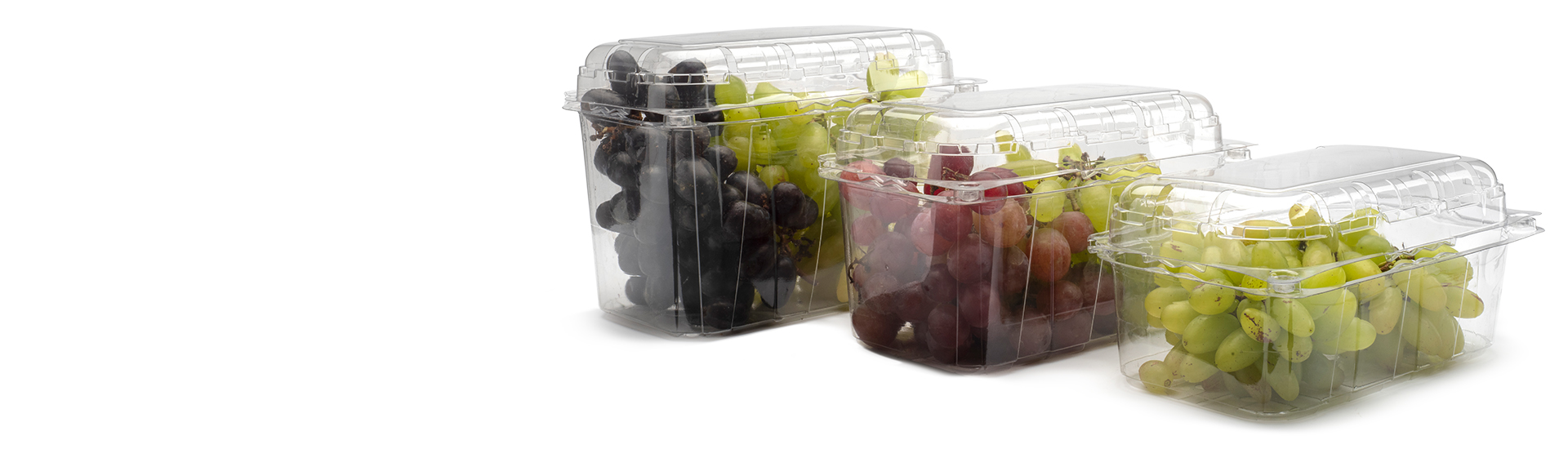
Clamshell packaging influences much more than product containment. It affects product protection, airflow, moisture management, stacking performance, handling efficiency, and retail presentation throughout the supply chain.
What looks like a simple packaging decision can directly affect how much saleable product ultimately reaches consumers.
That is why clamshell packaging has become an important consideration for businesses looking to reduce losses, improve shelf life, and maintain product quality from packing through purchase.
Why product protection starts long before retail
Most products are packed in good condition.
The challenge is making sure they stay that way.
Once packed, products move through warehouses, cold storage facilities, transport networks, distribution centers, and retail environments. Every stage introduces handling, movement, and stacking pressure.
The package becomes the first line of protection.
If the clamshell does not provide sufficient structural support, the product inside becomes more vulnerable to damage throughout the journey.
That can lead to:
- Product movement inside the pack
- Compression-related damage
- Broken or crushed products
- Reduced product quality
- Higher rejection rates
The business impact is straightforward.
More damaged products mean more waste, lower product recovery, and fewer saleable units reaching the shelf.
Why shelf life is usually affected by packaging
When shelf life begins to fall, attention usually turns to refrigeration, storage conditions, or handling approaches.
Those factors certainly play a role.
But packaging also plays an essential role.
Fresh produce continues to release moisture after packing. It continues reacting to temperature and airflow conditions throughout storage and transport.
The package becomes part of the product’s environment.
If moisture is not managed effectively, product quality can start changing much sooner than expected.
Well-designed clamshell packaging helps support:
- Consistent airflow
- Better cooling performance
- Reduced moisture accumulation
- Improved condensation management
- More stable storage conditions
The outcome is measurable.
Products stay fresher for longer, spoilage rates decrease, and more inventory remains saleable throughout the distribution cycle.
Why closure reliability affects product losses
A closure only becomes noticeable when it fails.
But when it does, the consequences can be immediate.
A pack that opens during transport or handling can expose products to damage, contamination, and unnecessary losses.
A secure locking mechanism helps keep the clamshell firmly closed throughout handling and transport, reducing the risk of accidental opening while protecting the product inside.
Reliable closure performance helps maintain:
- Package integrity
- Product protection
- Shelf presentation
- Handling efficiency
- Consumer confidence
For businesses, this means fewer damaged products, lower losses, and greater consistency throughout the supply chain.
Why stackability influences operational efficiency
Every clamshell spends part of its journey stacked with hundreds or thousands of other packs.
If the package cannot handle stacking pressure effectively, product damage often follows.
Poor stackability can lead to:
- Package deformation
- Product damage
- Unstable pallet loads
- Increased handling risks
- Lower transport efficiency
A well-designed clamshell distributes stacking loads across its structure instead of transferring pressure directly onto the product below. This helps maintain pack stability while reducing the risk of product damage during storage and transport.
The business outcome is clear.
Fewer transit losses, better pallet utilization, safer handling, and more efficient logistics operations.
Why retail performance starts before the shelf
Consumers rarely know how a product was grown, packed, or transported.
What they do see is the package.
A product may still be fresh, but if the packaging looks damaged, poorly organized, or inconsistent, customer perception can change immediately.
Packaging influences:
- Product visibility
- Pack appearance
- Product arrangement
- Shelf presentation
- Consumer confidence
Good clamshell packaging helps products arrive looking the way they were intended to be sold.
That can directly support stronger retail presentation and a better purchasing experience.
Why manufacturing consistency matters
Even the best package design depends on consistent execution.
Two clamshell packs may look identical when they leave production.
The difference often appears later.
Variations in forming accuracy, wall thickness, or material distribution can affect how the package performs during stacking, handling, transport, and retail display.
Consistent thermoforming helps maintain:
- Structural stability
- Closure performance
- Dimensional accuracy
- Stackability
- Packaging consistency
The result is fewer quality variations, lower rejection rates, reduced packaging-related losses, and more predictable packaging performance.
Why packaging performance matters beyond the packing facility
At AVI Global Plast, packaging performance is evaluated based on what happens after products leave the packaging facility.
Because success is not measured when a pack leaves production.
It is measured by how well that pack protects products, preserves quality, and performs throughout the supply chain.
Consistent thermoforming helps clamshell packaging maintain structural integrity, reliable closure performance, and stable product protection during storage, transport, handling, and retail display.
For customers, the benefits are practical and measurable:
- Lower spoilage
- Reduced product damage
- Fewer rejected shipments
- Better retail presentation
- More saleable products reaching consumers
That is ultimately what packaging performance is meant to deliver.