
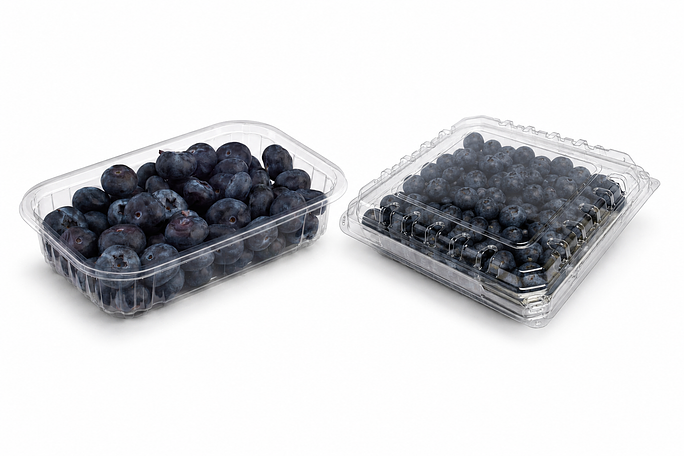
Step into any supermarket produce section, and the difference is usually visible within seconds. Some berry packs still look firm and healthy, clean, and properly stacked even after hours on display. Others start to sink slightly at the corners and intersections, lids bend inward, fruit settles unevenly, and moisture begins to collect near the bottom of the pack.
The berries inside may have started with the same quality. The packaging performance did not.
For retailers, exporters, and produce packers, this matters far more than appearance alone. Structural performance directly affects shelf presentation, handling efficiency, transit losses, and overall product protection. That is where plastic berry containers start doing much more than simply holding fruit.
And most packaging issues do not appear immediately after filling. They gradually become visible as the packs move through pallet stacking, refrigerated transport, repeated handling, shelf replenishment, and retail display conditions. Throughout that journey, the container either continues to support the fruit properly or slowly starts losing the stability needed to consistently protect it.
Why structural strength matters beyond shelf appearance
Berries react quickly to pressure. Even small amounts of compression inside the pack can affect firmness, appearance, and shelf life much faster than many people expect.
Berries react quickly to pressure. Even small amounts of compression inside the pack can affect firmness, appearance, and shelf life much faster than many people expect.
If the base flexes too much or the sidewalls lose rigidity during stacking, weight starts transferring unevenly onto the fruit itself. That is when crushed berries, juice leakage, or softened fruit near the bottom of the pack start becoming visible. Retailers notice these issues quickly because the pack no longer looks fresh or stable on the shelf.
Strong plastic berry containers help distribute external pressure more evenly across the structure instead of directly onto the fruit. That difference becomes important during pallet stacking, cold-chain transport, and retail handling, where packs are constantly being moved, lifted, and restacked.
Even relatively small changes in rib geometry, wall distribution, or lid rigidity can noticeably improve a pack’s performance across long distribution cycles.
Why retail handling puts packaging under constant stress
A berry pack goes through far more handling than most people realize once it reaches retail shelves. Packs are lifted repeatedly, shifted during shelf stocking, lightly compressed by shoppers checking freshness, and moved in and out of refrigeration throughout the day. Weak packaging begins to show stress quickly under those conditions.
A container that loses its shape halfway through display immediately changes how the product is perceived. Consumers often associate pack appearance with freshness before they even look closely at the fruit itself. That is why retailers prefer packaging that maintains dimensional stability throughout display hours.
Well-designed plastic berry containers help the fruit remain visible, properly arranged, and protected without excessive movement inside the pack. Stable lid-lock performance and consistent sidewall rigidity also help reduce handling-related damage during shelf replenishment and transport.
Over time, that consistency directly affects shelf presentation and customer confidence.
Why product safety depends on packaging stability
Structural integrity also affects product safety in very practical ways. When packaging starts to weaken, lids may stop closing consistently, sidewalls may deform under pressure, and fruit movement within the pack increases. Once berries begin rubbing against each other repeatedly during transport, abrasion damage and moisture leakage increase much faster.
And once moisture starts collecting inside the pack, shelf conditions begin to change quickly.
Softer fruit deteriorates faster, handling risks increase, and shelf life becomes harder to maintain consistently across shipments.
Strong plastic berry containers help reduce unnecessary fruit movement and maintain more stable pack conditions during handling and transit. This becomes especially important in long-distance distribution and export supply chains, where products spend extended periods in refrigerated environments.
Why thermoforming consistency affects structural performance
Packaging strength is not only about design. It also depends on how consistently the packaging is manufactured. In thermoformed packaging, even small variations in wall thickness, material distribution, or forming accuracy can affect how the container behaves under stacking pressure. If rigidity varies across production runs, packaging performance also becomes less predictable during transport and retail handling.
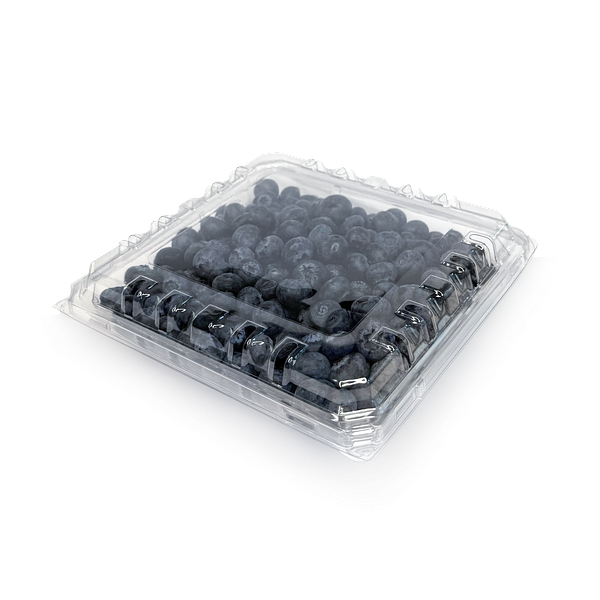 And in fresh produce packaging, inconsistencies usually become apparent very quickly as the packs move through the supply chain. This is particularly important in high-volume fresh produce packaging, where thousands of packs move through the cold chain together.
AVI Global Plast manufactures thermoformed fresh produce packaging using food-contact-compliant rPET materials designed for consistency, traceability, and reliable structural performance. Controlled thermoforming helps maintain dimensional accuracy, consistent lid fit, and stable load-bearing behavior across production runs.
That consistency becomes extremely important once the packaging moves into real retail and export conditions.
Why does packaging performance become visible later in the supply chain
Fresh produce packaging is rarely judged only at dispatch. Most structural weaknesses become visible later, after transportation, storage, retail handling, and customer interaction.
That is usually where packaging quality starts separating itself very quickly.
A container may appear acceptable during packing but behave very differently after extended stacking pressure, refrigeration exposure, and repeated movement across the supply chain.
And this is why structural integrity matters so much in fresh produce packaging. The packaging needs to continue performing consistently long after it leaves the production facility.
Why structural integrity matters more in modern retail supply chains
Fresh produce now travels longer routes, undergoes multiple handling steps, and is refrigerated for longer periods before it finally reaches retail shelves. And somewhere along that journey, packaging starts showing whether it was designed to handle those conditions properly.
Hence, retailers and exporters are paying much closer attention to packaging performance beyond appearance alone.
At that moment, the container is no longer just shielding the fruit. It is influencing how the product looks, stacks, travels, and sells throughout the supply chain.
Structural integrity now directly affects shelf presentation, product protection, handling stability, stacking performance, transit durability, and shelf-life consistency. Hence, packaging decisions are increasingly moving toward structural reliability, thermoforming consistency, and real supply-chain performance, rather than focusing solely on visual appeal.
FAQs
Why are strong berry containers important for retailers?
They help reduce fruit damage, maintain shelf presentation, and improve handling stability throughout storage and retail display.
How do plastic berry containers improve product safety?
They reduce excessive fruit movement, maintain secure closures, and help minimize compression-related spoilage during transport and retail handling.
Can weak packaging affect berry shelf life?
Yes. Structural collapse or poor rigidity can increase bruising, moisture buildup, and early fruit deterioration.
What features improve container strength?
Ribbed sidewalls, balanced wall distribution, reinforced lids, stable vent placement, and controlled thermoforming consistency all contribute to better structural performance.
Are plastic berry containers suitable for export supply chains?
Yes. When properly designed and manufactured consistently, they support stacking strength, cooling performance, and product protection across long-distance distribution.
Why structural integrity directly affects retail performance
Retail packaging performance is not determined only by how the container looks during filling. It is determined by how consistently it protects the product throughout transport, refrigeration, shelf display, and customer handling.
When structural rigidity begins to weaken, fruit quality usually follows quickly.
But when plastic berry containers maintain shape consistency, stacking stability, and controlled product movement throughout the supply chain, they help protect both shelf life and retail presentation much more reliably.
At AVI Global Plast, thermoformed fresh produce packaging is developed with a focus on structural consistency, food-contact compliance, and reliable supply-chain performance across modern retail and export environments.
The outcome is clear. Packaging that shields product quality, maintains shelf appeal longer, and performs reliably across mandating fresh produce supply chains.