
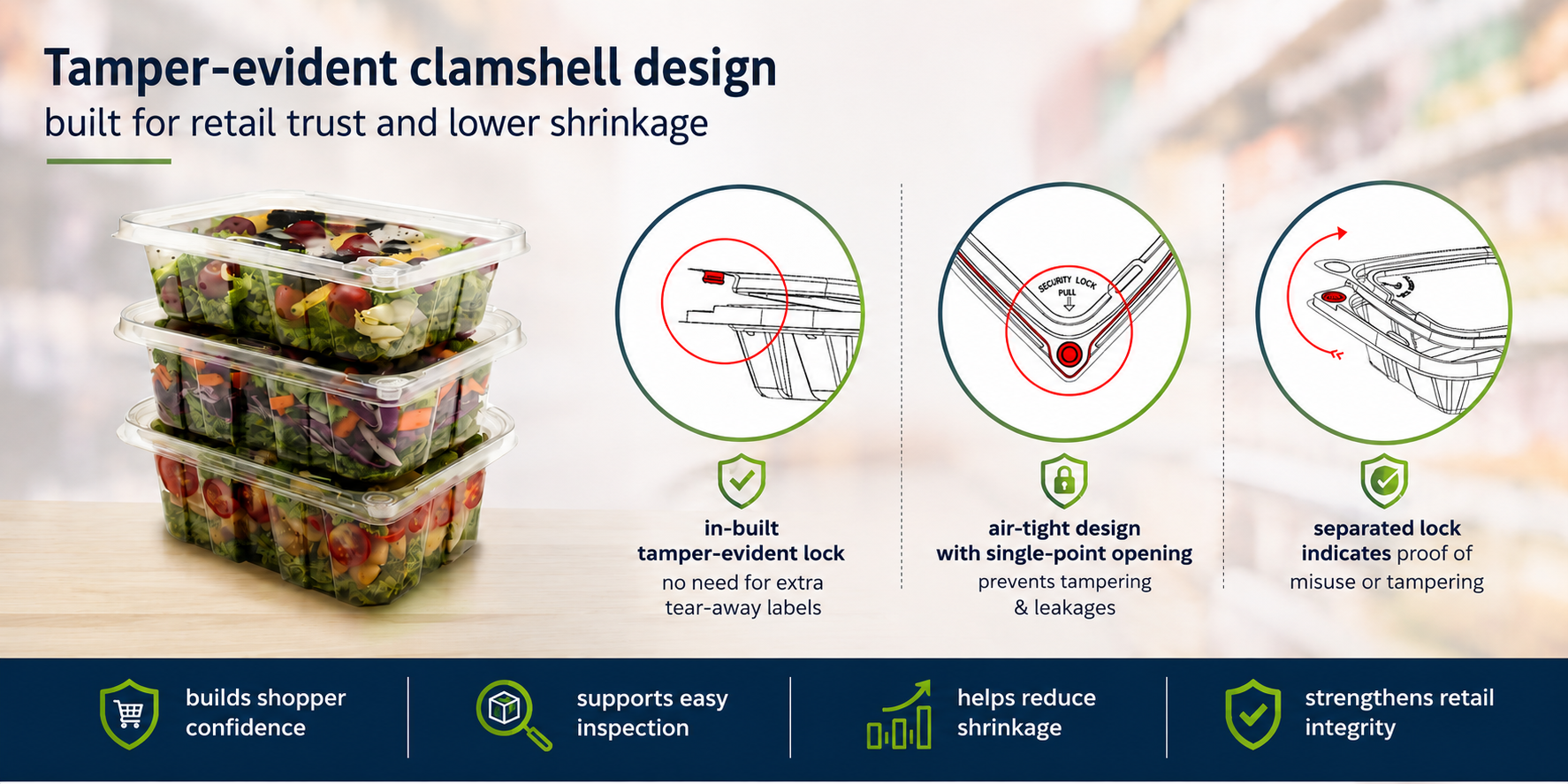
A shopper handling a retail package usually checks the product first. Then comes a quick question: does the package look unopened?
That is where package design matters. In a clamshell, the closure, material stiffness, forming accuracy, and overall structure can influence how easily signs of opening are noticed and how well the package holds its shape through transport, stocking, and customer handling.
Why closure performance matters on retail shelves
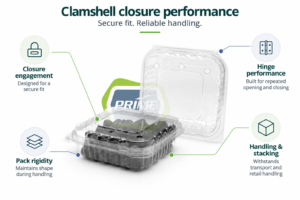
In a retail clamshell, the closure needs to remain securely engaged through transport, stacking, stocking and customer handling. Button locks, snap features and hinge geometry can influence how reliably the package stays closed and how easily retailers can identify a package that has opened.
A secure closure is not the same as tamper evidence. True tamper-evident packaging should clearly indicate when the package has been opened.
Why pack rigidity supports closure performance
The package needs enough rigidity to maintain its intended shape during stacking, transport and retail handling. Excessive flexing can affect closure engagement and the overall fit of the finished pack.
Material selection and pack geometry should therefore be considered together when developing a clamshell for a specific retail application.
Why closure and hinge geometry matter
A clamshell closure is only reliable when the lock, hinge and mating surfaces are formed accurately. Dimensional variation can affect closure engagement, alignment and the pack’s finished appearance.
For high-volume production, consistent forming helps converters maintain the intended closure geometry across production runs.
What buyers should evaluate
- Closure engagement and retention
- Hinge performance
- Accidental opening during handling
- Pack rigidity and stacking
- Finished-pack dimensions
- Product visibility
- Expected transport and retail conditions
These factors should be evaluated together because a closure that performs well during initial testing still needs to remain reliable through transport, stacking and retail handling.
Choosing the right material for the clamshell
Material selection should support the required rigidity, forming accuracy and closure geometry of the finished clamshell. AVI Global Plast supplies PET-based sheet solutions for thermoformed packaging applications and can guide material selection based on the pack design and forming requirements.
Build confidence into every package
A well-designed clamshell should remain securely closed, maintain its shape and perform consistently from production through retail handling. The right combination of material, closure geometry and pack design can support reliable package integrity.
Planning a new retail clamshell application? Contact AVI Global Plast to discuss APET sheet selection based on your forming process, package design, and performance requirements.
FAQs
What is the difference between a secure closure and tamper evidence?
A secure closure is designed to keep the package closed during handling. True tamper evidence provides a visible indication that the package has been opened.
What should buyers check in a retail clamshell closure?
Review closure engagement, retention, hinge performance, accidental opening, pack rigidity and expected handling conditions.
Can clamshell design affect accidental opening?
Yes. Closure geometry, hinge behaviour, material rigidity and dimensional accuracy can all influence how securely the package remains closed.
What should converters evaluate when developing a clamshell?
Consider material, closure and hinge geometry, forming accuracy, stacking requirements, transport conditions and the intended retail application.