
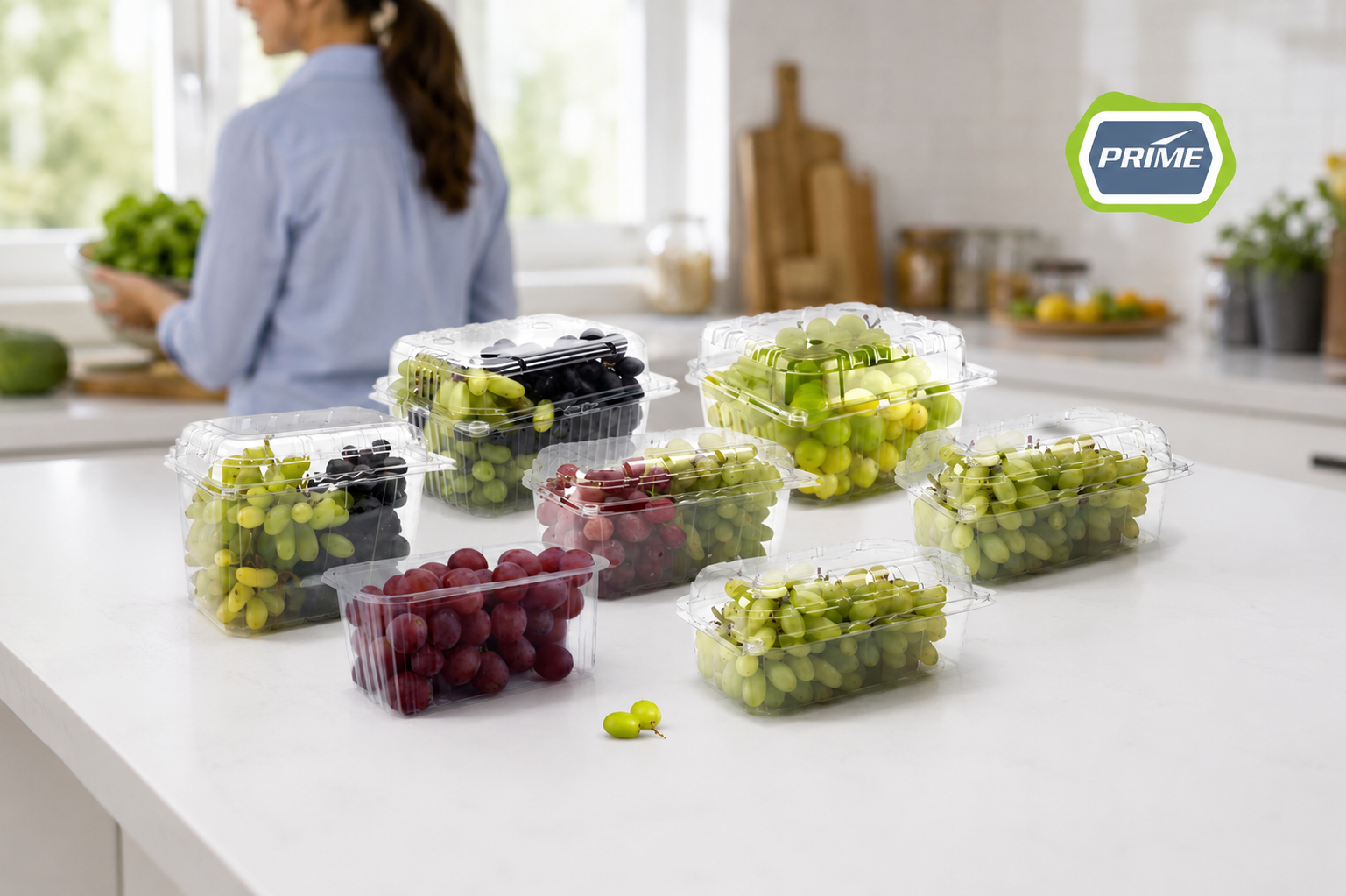
A fresh-produce pack is handled repeatedly before it reaches the customer. It passes through packing lines, cold rooms, transport vehicles, stores, and retail shelves, yet the produce inside still needs to look fresh when customers see it.
Changing the material is not simply about selecting one with recycled content. The sheet must also form consistently, maintain the pack’s shape, provide clear product visibility and perform reliably during handling. For exporters, that can mean fewer packing-line issues, lower risk of rejection and fewer problems during transit. Effective sustainable packaging solutions must meet all of these needs.
What exporters should check before changing the material
Consider the conditions the pack will face after production. For instance, a grape punnet may be stacked with other packs, exposed to condensation and handled repeatedly before it reaches the store.
A material may run well on the forming line and still create problems later if the finished pack loses stiffness during transport. For exporters, that can translate into damaged packs, product presentation issues or avoidable losses at the destination. Variations in sheet thickness can also affect pack uniformity and handling.
Before switching, exporters should check:
- Recycled-content percentage: Confirm how much recycled material the sheet contains and how that percentage is verified.
- Traceability: Check whether the recycled material can be traced through the relevant supply chain and production records.
- Food-contact suitability: Confirm that the material and recycled-content process suit the intended food-contact application.
- Destination-market documentation: Make sure the supplier can provide the documentation required for the market where the finished packaging will be sold.
- Pack performance: Review clarity, stiffness, thickness, forming behaviour and finished-pack performance.
- Packing-line compatibility: Confirm that the material can run on the existing forming and packing process without creating unnecessary disruption.
- Commercial-volume consistency: Ask whether the material can maintain consistent performance beyond initial trials and across regular production volumes.
Regulations matter too. In the EU, recycled plastic materials and articles intended to come into contact with food are specifically addressed under Commission Regulation (EU) 2022/1616, alongside the wider EU food-contact framework. In the U.S., the FDA evaluates recycled plastics used in food-contact applications based on factors such as the recycling process, source controls, potential contaminants and intended conditions of use. FDA also provides specific guidance on the use of recycled plastics in food packaging. (Source)
For exporters, the practical point is simple: confirm the applicable requirements for the destination market and ask the supplier for the documentation needed to demonstrate suitability before switching materials.
What documents should exporters request?
Before approving a new recycled-content material, ask the supplier for the documentation relevant to the intended application and destination market. This may include:
- Recycled-content information and supporting verification
- Traceability records for the material
- Food-contact declarations or other applicable suitability documentation
- Product specifications and technical data
- Relevant regulatory or compliance documentation
- Supporting certificates or declarations where applicable
The exact documents will depend on the material, application and destination market, so they should be reviewed before commercial adoption.
Why recycled content needs traceability
A recycled-content percentage means more when clear records back it up. For food packaging, exporters should check where the recycled material comes from, how the recycled content is verified, how it is processed, and whether it is suitable for the intended food-contact application and destination market.
A credible sustainable packaging solution needs more than a percentage on a specification sheet. Clear records around recycled content and material origin can help businesses support customer requirements, regulatory documentation and internal compliance checks.
Why consistency matters after the switch
Changing sheet material can affect forming behaviour, thickness and finished-pack strength. If the new material behaves differently during thermoforming, the production process may require adjustments, potentially increasing variation, setup time and material waste.
For exporters, the bigger concern is whether those differences continue at commercial volumes. Consistent rPET quality can support predictable forming and more reliable finished-pack performance, helping reduce the risk of variation after the initial material trial.
AVI Global Plast supplies rPET sheets for fresh-produce packaging applications where recycled content needs to be considered alongside material consistency, pack performance and application requirements. For exporters evaluating a material switch, AVI can support discussions around the relevant rPET grade, application requirements, sheet performance and documentation needed for the intended packaging application. This helps buyers evaluate sustainability together with production compatibility, finished-pack performance and destination-market requirements.
Why sustainability and performance must work together
The most effective sustainable packaging solutions balance environmental goals with the practical requirements of export packaging. A material that supports recycled content but creates forming problems, inconsistent packs or documentation gaps may not deliver the expected business benefit.
For exporters, the right packaging solution is one that supports packaging performance, customer requirements and compliance without disrupting established packing operations.
Choosing the right material for export packaging
Planning to switch the material used in your fresh-produce export packs? Talk to AVI Global Pl
ast for technical guidance on rPET grades, recycled content, traceability and the right material for your application.
FAQs
What documents should exporters request when buying rPET packaging material?
Exporters should request relevant recycled-content verification, traceability records, food-contact suitability documentation, product specifications and applicable destination-market compliance documents. The exact requirements depend on the material, application and market.
What should be tested before switching from virgin PET to rPET?
Buyers should evaluate forming behaviour, thickness consistency, pack strength, clarity, dimensional stability and compatibility with the existing production process. Performance should also be assessed beyond initial trials before commercial adoption.
How should recycled content be verified?
Buyers should confirm the stated recycled-content percentage and ask for supporting documentation showing how the recycled content is sourced, verified and traced. The documentation should also be appropriate for the intended application and destination market.