
If you ask a packaging team what makes a good package, the response hasn’t varied much over the years.
It should protect the product.
Run consistently during production.
Reach the customer in good condition.
Those expectations still matter.
What’s transformed is the conversation around them.
Today, many customers also want to know where the material comes from, how much recycled content it has, and whether the package supports their sustainability promises. That is one of the reasons sustainable packaging has become an important part of packaging discussions rather than just an environmental initiative.
Not because the package looks different.
Because the material behind it is expected to do much more than before.
That shift is encouraging businesses to look more closely at material choices, recycled content, and compliance with India’s Plastic Waste Management requirements.
Increasingly, packaging decisions are also being influenced by Extended Producer Responsibility (EPR) obligations under India’s Plastic Waste Management Rules. For many brands, choosing the right material has become part of meeting compliance requirements as well as sustainability goals.
Packaging decisions begin long before production
Most packaging projects don’t begin on the production floor.
They begin with questions.
Can this material support recycled content? Will it still perform the same way? Will it comply with evolving regulations? Can we continue using it as our sustainability goals grow?
These questions now sit alongside cost, clarity, strength, and machine performance.
The answers are often decided long before the first sheet reaches the thermoforming machine.
Choosing the right material early helps businesses avoid unnecessary redesigns, reduce compliance risks, and build packaging that remains relevant as customer and regulatory expectations continue to change.
Why compliance now influences material selection
India’s Plastic Waste Management Rules place greater responsibility on producers, importers, and brand owners to manage the packaging they introduce into the market. Through the EPR framework, businesses are expected to improve collection, recycling, and the responsible use of plastic packaging.
That is changing the way brands and packaging manufacturers choose materials. Businesses are increasingly looking for materials that support recycled content, improve traceability, and fit more easily into their long-term compliance strategy.
For packaging teams, compliance is no longer a discussion that happens after production. It begins while choosing the material.
Choosing materials that support recycled content, traceability, and consistent performance makes it easier for brands to align their packaging with EPR and Plastic Waste Management requirements while maintaining operational efficiency.
Better packaging starts with choosing the right material
There isn’t one material that makes every package sustainable.
Every application asks for something different.
Fresh produce packaging focuses on visibility and ventilation. Frozen food packaging needs to perform in low temperatures. Medical packaging demands precision and consistency. Electronics packaging requires static protection.
Trying to solve every packaging challenge with one material usually leads to compromise.
Choosing the right material from the beginning makes production more consistent, protects the product better, and reduces the need for changes later.
Good packaging decisions almost always begin with good material decisions.
Recycled PET is becoming part of everyday packaging
Walk through almost any packaging facility today and you’ll notice something different.
Recycled PET is no longer treated as an alternative material.
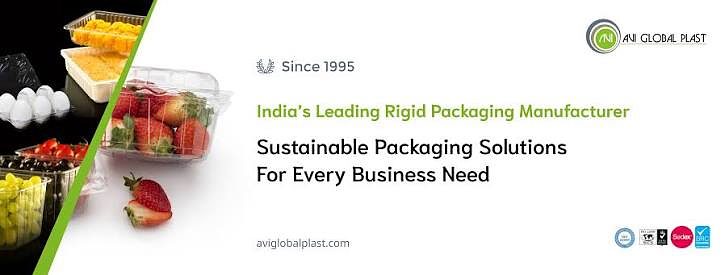
It has become part of everyday production across food trays, fresh produce punnets, clamshell packaging, and printing films.
Manufacturers are increasing recycled content without changing the way their packaging performs. For many brands, this means they can increase recycled content without redesigning existing packaging or disrupting production.
Recycled PET helps brands move towards higher recycled content while maintaining the performance expected from food trays, punnets, clamshells, and other thermoformed packaging. That makes it easier to support both sustainability initiatives and evolving compliance expectations.
Sometimes protecting the product is the most sustainable decision
Sustainability isn’t measured only by the material.
It is also measured by what the package prevents.
If food spoils before it reaches the consumer, the environmental impact is much greater than the package alone.
That is why packaging designed to preserve freshness and extend shelf life continues creating value long after production.
Barrier PET films help protect products such as meat, seafood, dairy, dry fruits, and ready-to-eat foods by maintaining oxygen and moisture barriers.
Less spoilage.
Less waste.
More products reaching consumers in the condition they were intended.
That benefits both the environment and the business.
Every application has its own packaging requirements
| Packaging application | Material commonly used | Business value |
|---|---|---|
| Fresh produce packaging | rPET | Supports recycled content while maintaining packaging performance |
| Frozen food packaging | Freeze-grade PET films | Performs reliably throughout cold-chain storage and transport |
| Medical packaging | PETG | Delivers consistent forming and excellent product presentation |
| Electronics packaging | ESD PET | Protects sensitive components from static damage |
| Meat, seafood, dairy and ready-to-eat packaging | Barrier PET films | Extends shelf life and helps reduce food waste |
The application changes. The expectation doesn’t.
The material also needs to support the compliance obligations associated with that application, without affecting production efficiency or packaging performance.
Packaging should perform consistently while supporting the needs of the business.
Sustainable packaging should still run efficiently
No production team wants sustainability to create new production problems.
Machines still need stable forming.
Operators still expect consistency.
Customers still expect the same quality package they have always received.
That is why material consistency remains just as important as recycled content.
When packaging performs reliably on the production floor, sustainability becomes easier to implement across the business rather than another operational challenge.
How AVI Global Plast approaches sustainable packaging
At AVI Global Plast, sustainability starts with understanding the packaging application, not simply recommending a material.
AVI Global Plast’s portfolio includes solutions such as rPET and Ocean-bound rPET that help businesses increase recycled content while maintaining the consistency, traceability, and performance expected in demanding packaging applications.
By helping brands choose materials that support recycled content and traceability, AVI Global Plast helps them build packaging strategies that are better aligned with EPR objectives under India’s Plastic Waste Management Rules.
This helps packaging manufacturers move towards their sustainability and compliance goals without compromising product protection, production efficiency, or packaging quality.
Different applications require different solutions.
Whether the requirement is rPET, ocean-bound rPET, APET, PETG, GAGPET, ESD PET, freeze-grade PET films, or barrier PET films, the focus remains the same: selecting the material that delivers the right balance of packaging performance, compliance, and long-term value.
The goal isn’t simply to supply plastic sheets.
It is to help manufacturers build packaging that performs consistently, reduces waste, supports evolving compliance requirements, and continues delivering value throughout the supply chain.
Why sustainable packaging is becoming a smarter business decision
Packaging has always protected products.
Today, it also helps businesses meet sustainability commitments, respond to India’s Plastic Waste Management Rules, support EPR obligations, and reduce waste without compromising packaging performance.
The best sustainable packaging doesn’t ask manufacturers to choose between compliance and efficiency.
It delivers both.
That is why sustainable packaging has become more than an environmental initiative.
It has become a smarter business decision; one that benefits production, customers, and the future of the business alike.