
Sustainability is frequently concerned with recycled materials, manufacturing practices, and environmental goals.
Those things count.
But sometimes sustainability becomes visible in a different way.
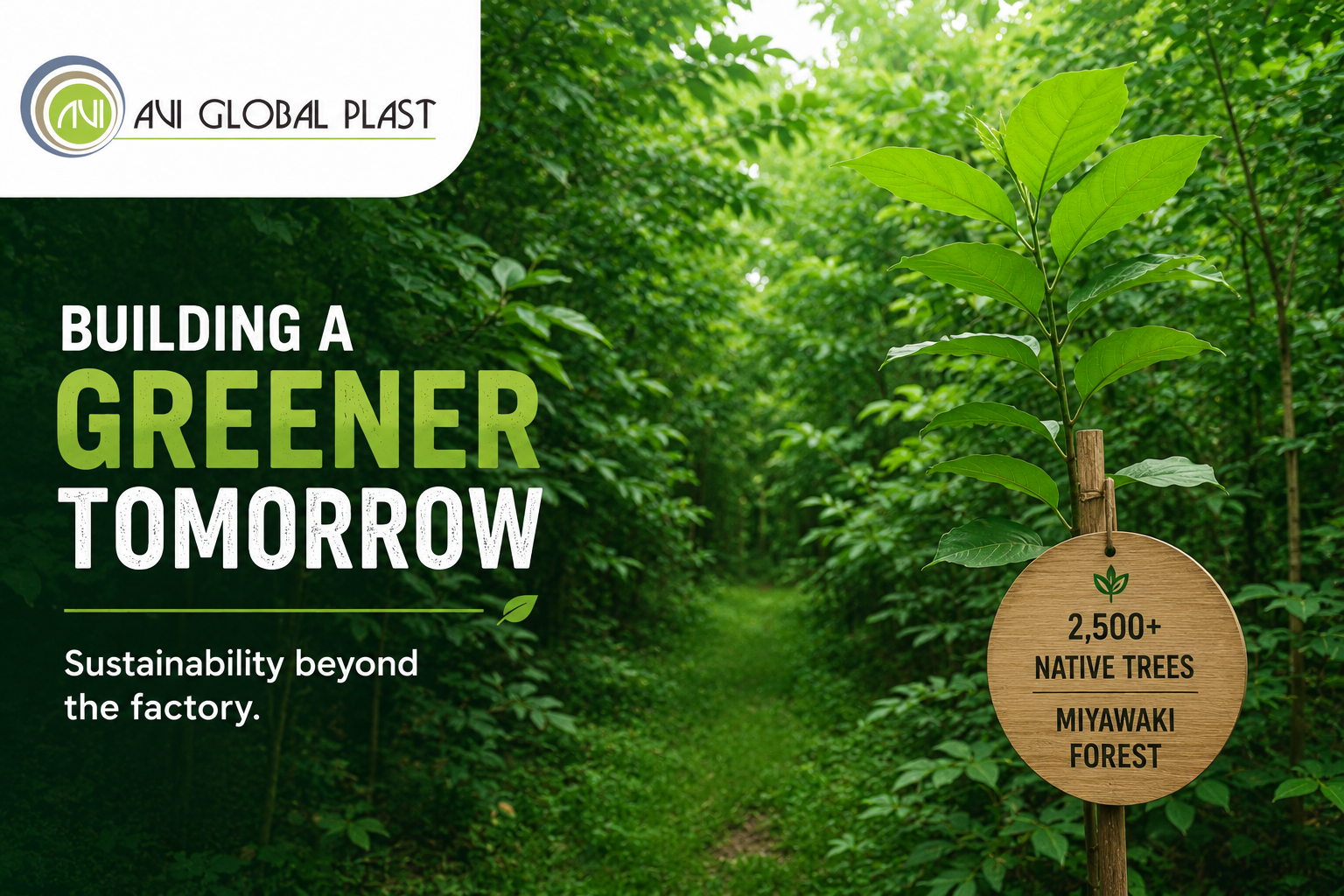
At AVI Global Plast, one such initiative took shape as a Miyawaki forest with more than 2,500 native trees.
At first, it may seem unusual.
Packaging companies are usually associated with production facilities and supply chains. Not forests.
But businesses today are expected to create value beyond the products they manufacture.
Which raises an interesting question.
Can a plastic packaging company really build a forest?
At AVI Global Plast, sustainability is not treated as a separate initiative.
It is part of how the business thinks about long-term growth.
Why sustainability is becoming part of business growth
Businesses today are expected to do more than offer products.
They are expected to use resources responsibly, decrease environmental impact, and contribute positively wherever practicable.
For many manufacturers, that starts inside the facility.
For AVI Global Plast, it extends beyond it.
One example is the Miyawaki forest developed at the company’s manufacturing location.
Creating impact beyond the factory walls
Planting trees is one thing. Creating a self-sustaining ecosystem is another.
Spread across approximately 9,000 square feet, AVI’s Miyawaki forest is home to more than 2,500 native trees.
The objective was not simply to add green cover.
The Miyawaki method was chosen because it focuses on planting diverse native species close together, allowing the forest to grow naturally into a dense, self-sustaining ecosystem.
Over time, it is expected to support biodiversity, improve the surrounding microclimate, absorb carbon, and create a healthier habitat for local birds and insects.
It was to create an ecosystem that supports biodiversity and continues growing over time.
The same thinking guides AVI Global Plast’s approach to sustainable packaging.
Whether through circular packaging solutions, recycled materials, or resource-efficient manufacturing, the goal remains the same: creating solutions that are better for business and better for the environment.
Why this initiative reflects AVI’s sustainability philosophy
The Miyawaki forest is not a standalone initiative.
It reflects how AVI Global Plast approaches sustainability across the business.
The same long-term thinking shapes its circular packaging solutions, responsible resource use, and investment in recycled materials.
The objective is simple.
To reduce environmental impact while continuing to deliver the performance customers expect.
So, can a plastic packaging company really build a forest?
Perhaps the better question is:
Why should sustainability stop at the factory gate?
For AVI Global Plast, it doesn’t.
Whether it is developing circular packaging solutions or creating a self-sustaining forest, the thinking is the same.
Build something that continues creating value.
For customers.
For communities.
And for the environment.