
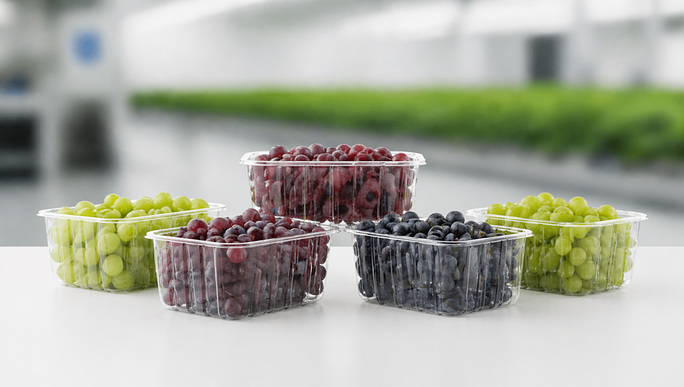
After packing, grapes continue to respire. Moisture is released inside the container. If it has nowhere to go, it settles. At the same time, cooling air is expected to move through cartons and across pallets. When airflow is uneven, some areas cool more slowly than others. Across large shipments, even small gaps in airflow create noticeable differences.
How ventilation design changes what happens inside the pack
It is easy to assume more vents will fix the issue. In reality, airflow depends on direction, not just volume. Air follows paths. It moves where resistance is lower and bypasses areas where it cannot flow easily. If ventilation is not aligned with these paths, air flows around the product rather than through it.
From individual packs to pallet-level airflow performance
Packaging does not perform one unit at a time. It performs in stacks. Once containers are packed into cartons and placed on pallets, airflow has to move across multiple layers. If vent openings do not align, the flow breaks. This creates uneven zones within the same pallet. When ventilation is engineered at a system level, airflow becomes continuous. Cooling stabilizes faster, and variation across the pallet reduces.
The difference is not theoretical. It shows up in how consistently the product holds quality across the shipment.
Why does moisture control directly affect shelf life?
Moisture is one of the fastest ways to lose shelf life in grapes. Even a small amount of condensation can change how the fruit behaves. Once moisture settles, the environment shifts toward faster deterioration. Ventilation helps prevent that.
Why consistency matters more than design alone
At scale, this creates inconsistency across shipments.
Consistency ensures that every pack behaves the same way within the system. It is what turns design into actual performance.
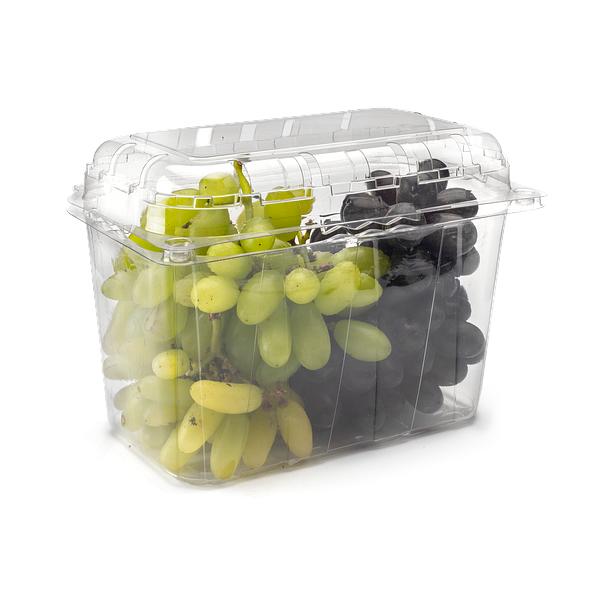
Ventilation performance depends on how accurately features are formed. Material variations, such as sheet thickness, moisture levels, and intrinsic viscosity, influence forming precision. Even small changes can affect vent geometry.
Beyond airflow: impact on export performance
Ventilation does more than manage air. It affects how the product moves through the entire supply chain. Better airflow leads to more uniform cooling, lower spoilage risk, and more consistent product quality at destination. For exporters, this reduces uncertainty. Fewer quality issues, smoother handling, and better acceptance at the receiving end.
Why grape containers remain central to cold chain performance
From airflow control to consistent export outcomes
Control over airflow. Control over moisture. Control over how the product behaves during transit. When ventilation is engineered correctly and supported by consistent manufacturing, it stabilizes conditions inside the pack and protects product quality across the journey.
FAQs
It refers to how airflow openings are configured to ensure consistent airflow through the pack.
Because uneven cooling and trapped moisture can lead to spoilage and reduced shelf life.
It enables uniform cooling and reduces condensation across the shipment.
Yes. Poor airflow can increase spoilage risk and affect product quality at the destination.
Because uniform forming ensures predictable performance across all units.