
As regulatory expectations tighten and sustainability commitments move from intent to execution, packaging is increasingly being evaluated on measurable outcomes—not just material choice.
In FY 2025–26, AVI Global Plast continued to support brands and supply chains with packaging solutions built on recycled PET, delivering quantifiable impact across material use, emissions, and resource efficiency.
Measured impact across packaging systems
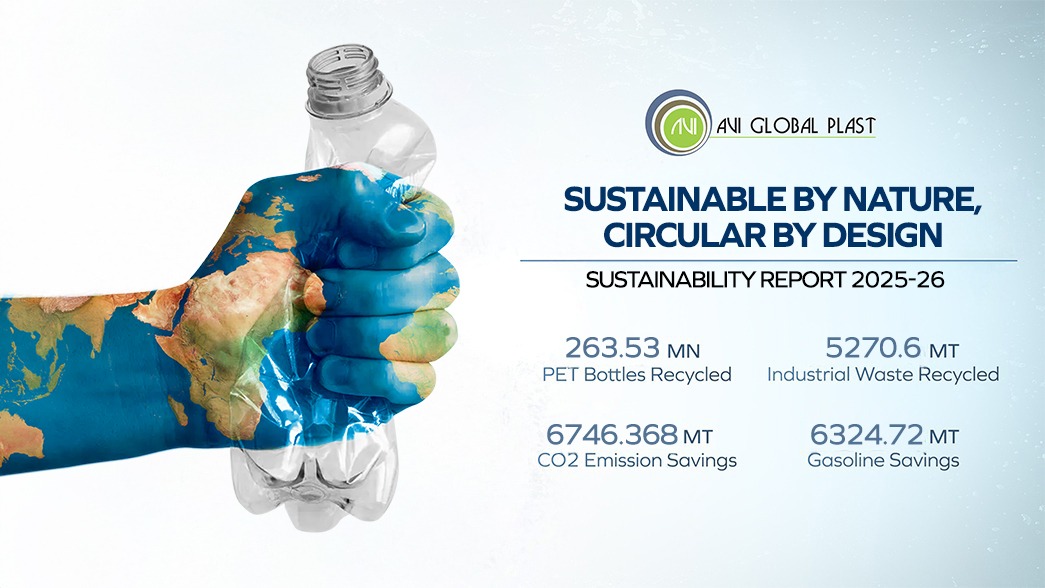
This year’s sustainability performance reflects the scale at which recycled PET is being integrated into real packaging programs:
- 5,271 metric tons of PET waste converted into rPET
- 263.5 million bottles brought back into circulation
- 6,746 metric tons of CO₂ emissions avoided
- 29,515 cubic meters of landfill space saved
- 6,325 metric tons of fuel consumption avoided
These outcomes demonstrate a shift from linear material consumption to circular material use—where recycled PET is not an alternative, but a reliable input in packaging production.
From recycled content to packaging performance
While recycled content remains central to sustainability, its application in packaging depends on consistency, compliance, and performance under real supply chain conditions.
At AVI Global Plast, recycled PET is engineered to meet the requirements of:
- Food-contact safety and global regulatory standards
- Thermoforming performance across high-speed production lines
- Clarity, strength, and sealing integrity for retail packaging
- Shelf-life optimisation for fresh and processed food applications
This ensures that brands can transition to recycled material without compromising product protection, machinability, or consumer experience.
Aligning with evolving regulatory requirements
The transition to circular packaging is now being driven not only by sustainability goals but also by regulatory mandates.
Under the Plastic Waste Management (Amendment) Rules, 2026, the use of recycled plastic content in rigid packaging is set to increase progressively—from 30% in 2025–26 to 60% in the coming years—making compliance a critical consideration for producers, importers, and brand owners.
In this environment, packaging decisions are no longer limited to cost and design—they must also address:
- Recycled content targets
- Traceability and audit requirements
- Annual reporting and compliance verification
AVI Global Plast as a strategic supply-chain partner
Meeting these requirements requires more than access to recycled material—it requires control over material quality, process consistency, and application-specific design.
AVI Global Plast works closely with brands and partners to:
- Enable traceable and certified recycled PET integration
- Deliver consistent material supply across production cycles
- Support application-specific packaging design and performance
- Align packaging programs with compliance and reporting requirements
This approach positions AVI not just as a packaging manufacturer, but as a strategic partner in building compliant, scalable circular packaging systems.
Driving circularity through design and execution
Circularity in packaging is not achieved through material selection alone. It is built through:
- Integration of recycled inputs into production systems
- Design optimisation to reduce material usage
- Operational efficiencies that minimise waste
- Collaboration across the value chain
By combining material expertise with manufacturing control and application knowledge, AVI Global Plast continues to support brands in transitioning towards circular packaging models that are both sustainable and commercially viable.
Looking ahead
As sustainability moves from aspiration to accountability, the focus will increasingly shift towards measurable outcomes, verified claims, and compliant packaging systems.
AVI Global Plast remains committed to supporting this transition—delivering packaging solutions that combine recycled material, performance reliability, and regulatory alignment.